Redefining Ownership: Product as a Service for Sustainable Access


As climate change impacts intensify, hybrid work matures, and supply chains remain volatile, organizations are reassessing procurement models that were designed for a more stable operating environment. The traditional “buy, own, dispose” approach increasingly drives hidden costs, operational inefficiencies, and unnecessary waste.

In Canada, only 6.1% of materials are reused or recycled, underscoring both the urgency and the opportunity to improve circularity through smarter procurement strategies. Buying-as-a-Service (BaaS) offers a compelling path forward by shifting organizations from product ownership to access-based models, where businesses pay for the outcomes that products deliver. This approach reduces environmental impact, strengthens operational resilience, and delivers greater cost predictability.

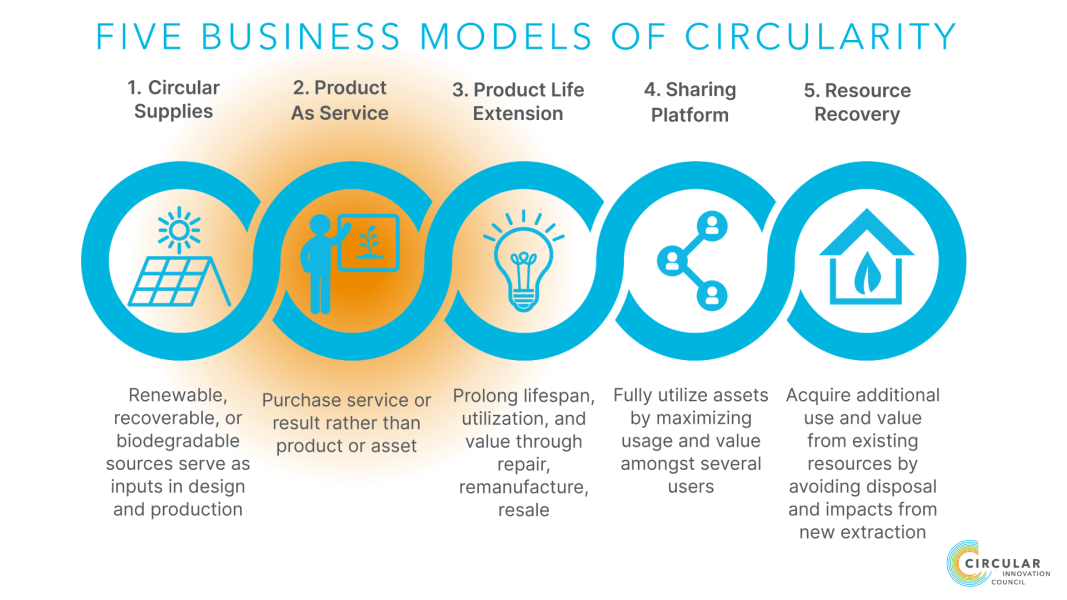
 

In our Circular Business Models series, we explore how different business models drive the transition toward a circular economy. In previous articles, we examined how approaches such as Resource Recovery and Sharing Platforms help maximize value and reduce waste. In this article, we delve deeper into the Product as a Service model and highlight case studies and practical steps municipalities and organizations can take to put circularity into action.

What is Product as a Service?

In simple terms, Product as a Service means purchasing a service rather than the physical product itself. Think of it as paying for the performance-based outcome, such as light instead of a lamp, clean clothes instead of a washing machine, or printed pages instead of a printer. This model shifts away from the traditional buy-to-own approach toward service-based models, such as subscriptions, or pay-for-use arrangements. Customers gain access to a product’s functionality or benefits without owning it, while the costs and responsibilities for maintenance, repair, and waste management rest with the provider. Common examples include tool rentals, lighting-as-a-service, printing services, car-sharing, laundry or dry-cleaning services, and other rental programs.

In a circular economy, this model allows companies to build longer, stronger relationships with customers and capture more value from each product by enabling multiple uses throughout its lifetime. It also promotes resource recovery and product life extension, as providers benefit from keeping products in use and recovering materials at the end of life. Closely linked to Sharing Platform models, Product as a Service reinforces the shift from ownership to access, helping maximize product utilization and minimize waste across sectors.

CIC Spotlight: Circular Procurement Program

In line with this circular business model, our Circular Procurement Program recognizes the opportunity to leverage buying power to influence markets and accelerate circular solutions. Circular procurement encourages a shift in defining buying needs toward outcomes and functionality rather than technical specifications. By redefining purchasing needs to identify desired outcomes, organizations benefit from innovative business models and solutions such as Product as a Service.

CIC’s circular procurement program supports this transition through educational resources and capacity-building initiatives, including policy frameworks, , toolkits for measuring impact, pilot programs, and a collaborative community of practice network. Through its national category-focused Procure4Circular network and circular procurement workshops, the program encourages and enables participants to integrate circular principles into purchasing practices and drive long-term sustainable and economic value.

CASE STUDY: HP Canada Drives New Era of Service-Based Purchasing

Legacy Purchasing No Longer Meets Modern Demand

When businesses buy equipment like printers or laptops, the focus is usually on the upfront price; however, the true Total Cost of Ownership includes much more —maintenance, repair, energy use, downtime and end-of-life management should all be considered.

These lifecycle costs are often overlooked and can add up quickly. Traditional low-cost purchasing also discourages manufacturers from designing durable or repairable products, since longevity doesn’t affect the initial sale. The result is more wasteful and shorter product lifespans.

Traditional procurement focuses on the lowest upfront cost, not long-term value. This hides true ownership costs, discourages durable product design, and, through siloed decision-making, often excludes sustainable options that could lower costs. As a result, internal teams spend time managing assets instead of focusing on higher-value work.

Sustainability is often treated as a separate initiative. In practice, if an organization is already spending money on products, those investments can also support environmental goals through smarter purchasing choices.

Drive Operational Efficiency through Buying-as-a-Service

BaaS replaces ownership with access. Instead of owning a device, an organization pays for what the product provides such as printing services, uptime, or device availability.

The supplier retains ownership of the equipment and depending on the customer’s needs can handle setup, maintenance, upgrades, and responsible recovery. This aligns incentives for the suppliers around durability, repairability, and reuse.

This model also shifts spending from unpredictable capital costs to steady operational expenses, helping organizations plan more effectively. This efficiency translates into lower emissions, reduced waste, and improved resource utilization across the product lifecycle.

Choosing the Right Partner: Circular Procurement in Practice

BaaS is only as effective as the partner behind it. Organizations need providers with the scale, experience, and infrastructure to manage the full product lifecycle — from deployment and support to recovery and reuse — while aligning with broader business outcomes and sustainability commitments.

This is where established partners make a measurable difference. HP brings real-world examples of how BaaS can be delivered at scale, helping organizations reduce costs, simplify procurement, and advance circularity without compromising performance or security.
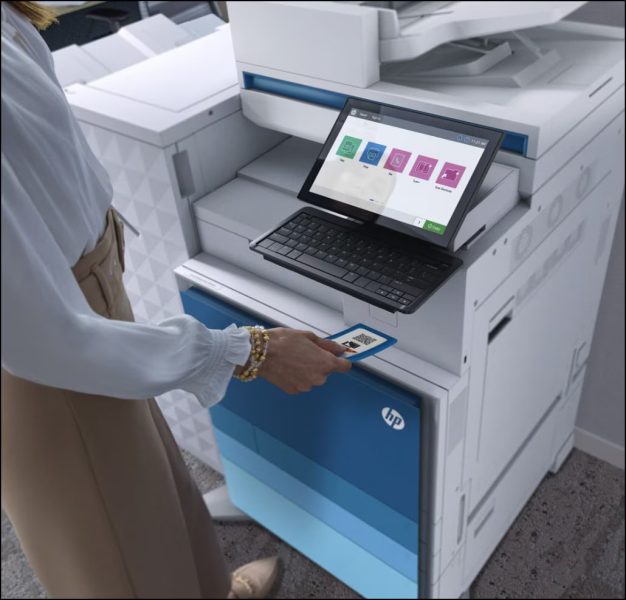
  • HP Managed Print Services (MPS) provides complete lifecycle management for printing. It includes fleet optimization, maintenance, security, usage analytics, and device recovery. Peer-reviewed lifecycle assessments show MPS reduce greenhouse gas emissions by 12% and improves resource efficiency by 13%.
  • HP Instant Ink supports home and hybrid workers through a subscription model. Ink is delivered automatically and used cartridges are recycled. This model has been shown to reduce emissions and improve resource efficiency by 73% .
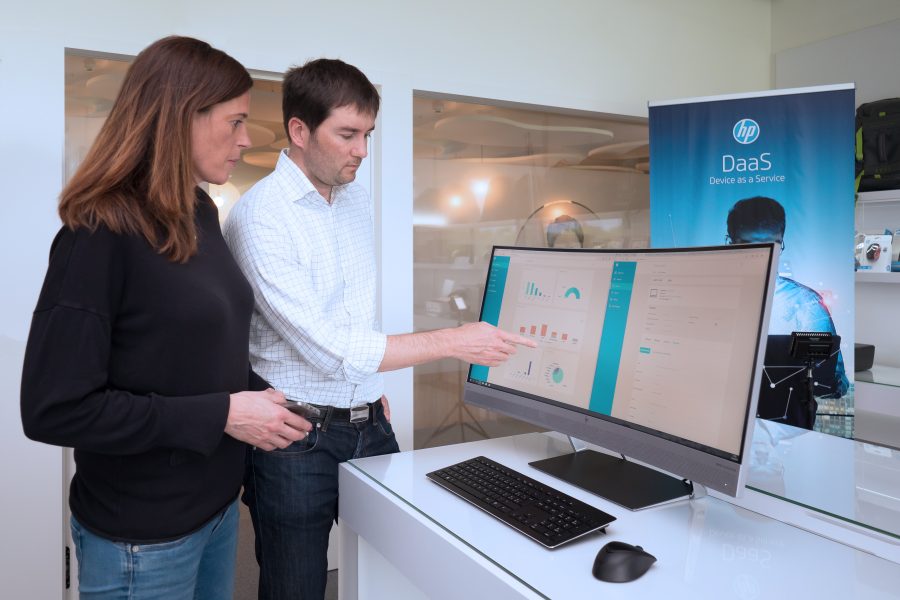
  • HP Device-as-a-Service (DaaS) bundles hardware, analytics, support, and lifecycle services. Compared with traditional device purchasing, peer-reviewed life cycle assessments show that DaaS reduces greenhouse gas emissions by 25% and improves resource efficiency by 28%. Organizations benefit from up-to-date technology, better user experiences, and less e-waste. Additionally, fleets can be scaled up or down depending on employee size – preventing wasted resources. DaaS also allows for better material management enhancing data security- a key issue for all organizations today.

How to Get Started

For organizations ready to explore BaaS or circular procurement, here are a few practical steps:
  1. Identify product categories that make good candidates. Start with equipment that is purchased regularly, may have high maintenance costs, frequent replacements, or low utilization.
  2. Review current costs and usage. Look at product age, downtime, energy consumption, and disposal/end of first life practices. Compare the full cost of ownership with the projected cost of using a service model.
  3. Make the business case. Consider long-term cost savings, environmental benefits, and the ability to shift from capital spending to predictable operating expenses.
  4. Define the outcomes you want. Focus on what matters—uptime, performance, security, and or sustainability—and let suppliers propose solutions.
  5. Pilot before scaling. Start with a small implementation to test the model and build internal support. For example, in the guide Buying as a Service: A How-To, a railway company successfully tested BaaS before rolling it out more broadly.
  6. Update procurement policies. Ensure that your processes and evaluation criteria support service-based models.
  7. Measure and improve. Use supplier reporting to track emissions, resource use, and waste reduction. Apply these insights to guide future decisions.

Smarter, More Sustainable Procurement

BaaS is more than a trend. It is a smarter, more resilient approach to managing equipment and services. By focusing on outcomes instead of ownership, organizations can reduce waste, cut emissions, and free up internal resources.

HP solutions including MPS, Instant Ink, and DaaS prove that circular, service-based procurement works today. These models reduce costs, simplify operations, and deliver measurable sustainability gains. As Canada looks to boost its circularity rate, organizations that adopt these models will be better prepared to meet environmental goals and build long-term resilience.

Securing a Resilient and Circular Future with PaaS

The Platform as a Service (PaaS) model is a cornerstone of the circular economy because it incentivizes solution providers to design for durability and material recovery. PaaS transforms cost and environmental impact by shifting organizations from ownership to outcomes. 

By leveraging circular procurement strategies, organizations can use their buying power to deliver significant environmental value and life-cycle cost savings. Through the support of initiatives like our Circular Procurement program, both public and private sectors can build the necessary capacity to move beyond the linear procurement model that drives waste and resource inefficiency, toward circular solutions for improved long-term value and resilience.

Circular Business Model Article Series

WE INVITE YOU TO JOIN US

Become a Member

We offer collaborative opportunity and inspiration to redefine value in communities across Canada through showcase opportunities and putting circular economy concepts into action.