

Construction is one of the most resource-intensive and wasteful sectors, presenting a lost opportunity. In Canada, approximately 3.4 million tonnes of construction waste are sent to landfill each year, containing an estimated 1.8 million tonnes of embodied CO₂e.
Advancing circular strategies such as improving material efficiency, prioritizing reuse, and keeping products and materials in circulation longer is essential for mitigating environmental and socio-economic issues across the built environment sector.
On May 27, Circular Innovation Council (CIC) hosted an insightful conversation focused on turning circular economy ambition into concrete action across construction, renovation, and demolition (CRD) materials.
Led by CIC Director Andrew Telfer, the conversation brought together leading practitioners from Canada and abroad. The discussion highlighted consistent themes across jurisdictions, noting that while policy direction, pilot projects, funding opportunities, and circular economy roadmaps are growing, system-level risk, procurement barriers, and capacity gaps continue to slow the sector’s transition to circularity.
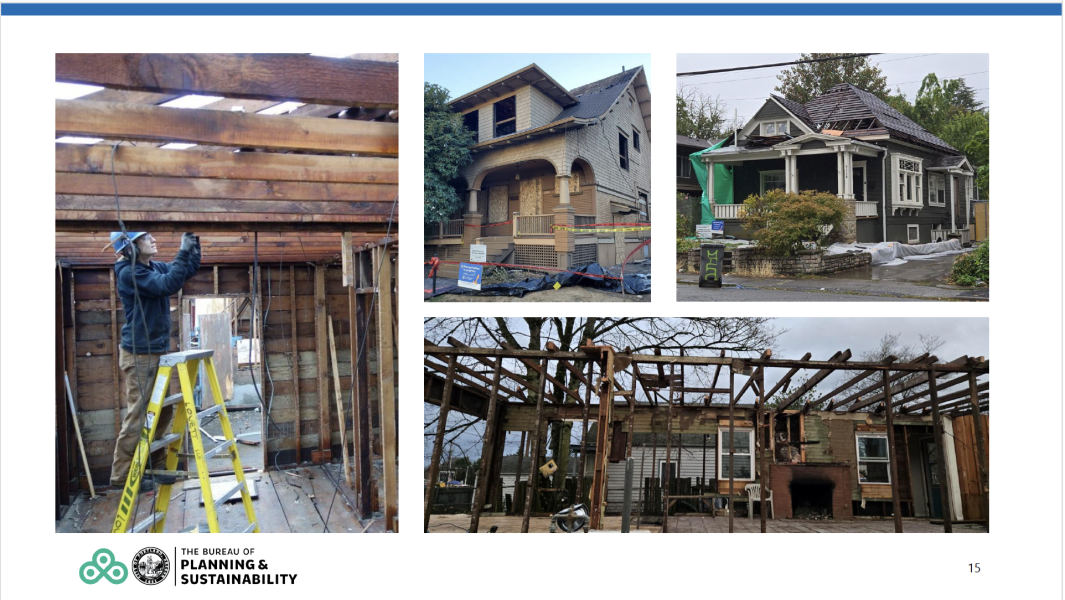
Lauren Onstad from the City of Portland Bureau of Planning and Sustainability shared insights from Portland’s Residential Deconstruction Program, which has become a leading example of municipal policy driving material reuse.
Portland’s phased deconstruction ordinance began in 2016 and has expanded over time to require that older homes and historic resources be manually disassembled to maximize material recovery and reuse. The program was developed in response to community advocacy, declining wood markets, and growing interest in salvage and reuse.
Today, all single-family homes and duplexes built in 1940 or earlier are required to undergo deconstruction rather than conventional demolition. The city now maintains a certified contractor list to support implementation and industry capacity building.
Over 10 years, the results demonstrate the scale of impact circular construction policies can achieve:
Alex Reeves of Zero Waste Scotland outlined Scotland’s evolving policy framework for circularity in the built environment. Scotland’s approach demonstrates how long-term policy alignment can help create enabling conditions for circular construction and material reuse.
The presentation traced Scotland’s circular economy journey through major policy enablers such as,
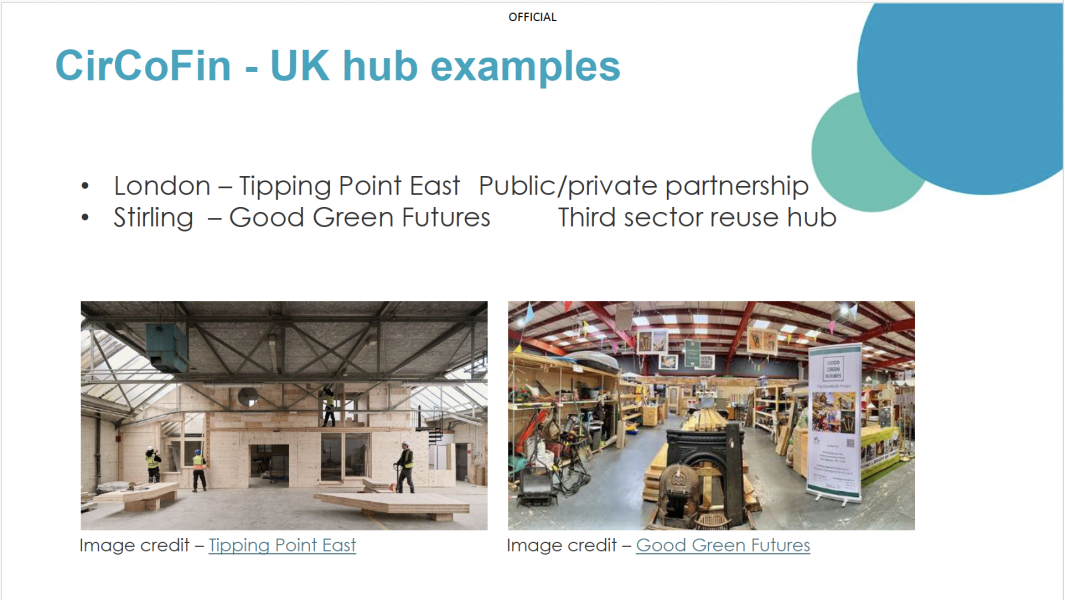
Recognizing that policy alone isn’t enough, Scotland is also supporting implementation through interventions such as embodied carbon targets, a Scottish aggregates tax, Built Environment Roadmap, and international collaboration projects like CirCoFin. Alex featured examples from reuse hubs and public-private partnerships across the UK and Europe that demonstrated how infrastructure and collaboration are helping scale secondary material markets and circular construction systems.
Corey Pembleton of the Federation of Canadian Municipalities introduced the Green Municipal Fund’s new Accelerating Circular Construction Materials (ACCM) opportunity, which aims to help municipalities advance circular construction practices across Canada. It supports studies exploring how communities can reduce construction waste, increase material diversion, and create the enabling conditions needed for long-term change.
Corey emphasized that circular construction presents major opportunities for greenhouse gas reductions, employment, skills development, and policy innovation. Rather than focusing only on individual studies, the initiative is designed to bring municipalities together as a collaborative cohort to share lessons learned, develop policy approaches, and build investment confidence.
Recognizing Canada’s highly varied regional and policy landscape, the program will assess local conditions, identify scalable solutions, and examine which pilot projects have been most effective. A key component of the fund is mandatory capacity building, including training, networking, conferences, and knowledge-sharing opportunities with leading practitioners in Canada and internationally.
By helping municipalities strengthen local policy foundations and connect with potential funding and investment pathways, the initiative aims to support long-term, broader scale-up of successful circular construction approaches across Canada.
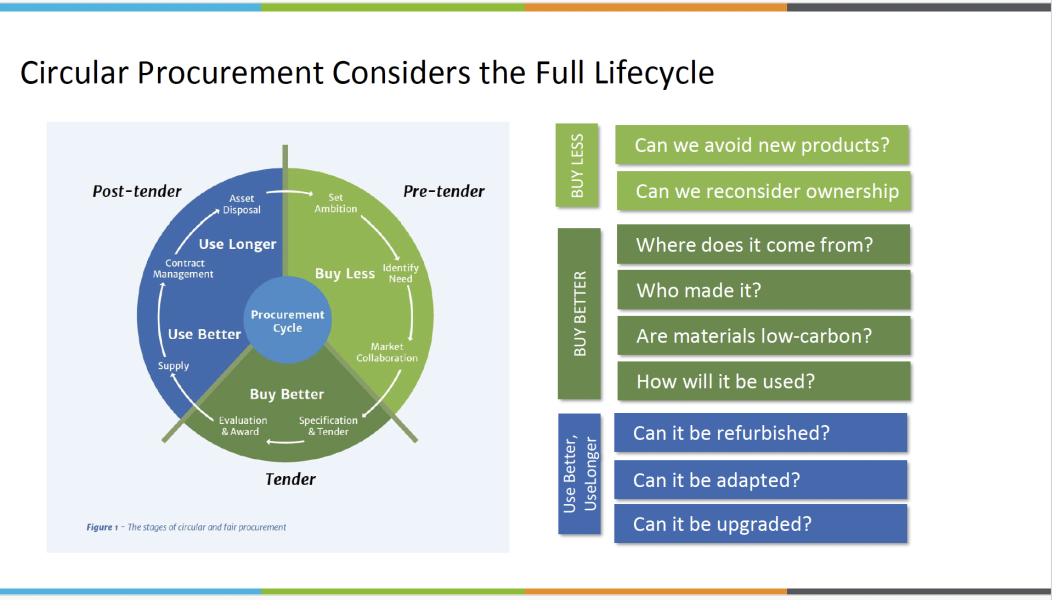
Circular Innovation Council’s Director of Circular Procurement Katie Motta, highlighted the role of circular procurement as one of the most powerful levers for driving systemic change in the construction sector.
With public sector procurement representing a significant portion of economic activity, and purchasing power accounting for approximately 13% of Canada’s GDP, governments have a unique opportunity to shape demand for circular materials and services.
Through CIC’s Procure4Circular Construction community of practice, CIC is helping de-risk innovative circular strategies through market engagement, supporting cities and public sector organizations to operationalize circular procurement. On June 4th, CIC is hosting a Deconstruction and Material Reuse industry workshop to inform business case, guidance and develop templates to advance procurement of these circular construction strategies.
Risk remains one of the biggest barriers to circularity in the sector
A dominant insight from the conversation was that both perceived and real risk within construction and procurement systems continue to slow the transition to circularity.
The discussion highlighted how:
“When you get to the procurement piece, how reliably are you going to find materials that meet your requirements and are circular – and do those supply chains exist regionally?”
CIC is helping break these procurement barriers through Procure4Circular and our upcoming Deconstruction and Material Reuse industry workshop that will inform business cases, guidance and develop templates to advance procurement of circular construction strategies.
Another key theme was the need to invest in skills and workforce development to support circular construction systems.
Corey emphasized the importance of empowering individual workers through training in deconstruction and circular construction practices, noting the potential for more equitable, people-centred approaches to workforce development.
Lauren highlighted the need to attract and train a new generation of construction workers, particularly as the sector faces workforce retirements. Alex reinforced the importance of breaking down silos between environmental and economic policy to better align job creation with sustainability outcomes.
“How do we empower the people who are doing the work? How do we empower the workers who are learning deconstruction skills themselves?”
Panelists agreed that accelerating circularity requires breaking down traditional silos across policy areas. Environmental goals must be integrated with economic development, infrastructure planning, procurement, and workforce strategy to create coherent systems that support circular outcomes.
Without this alignment, even strong pilot projects and policies risk remaining isolated rather than scaling system-wide change.
While deconstruction programs, procurement strategies, and policy frameworks are already demonstrating what is possible, scaling circularity will depend on:
Taken together, these approaches point toward a future where circular construction becomes not the exception, but the standard practice.
Want to learn more about the Circular Innovation Council’s work to advance circularity of CRD materials? Interested in collaborating on our projects and future webinars on the topic? Please reach out to Andrew@CircularInnovation.ca, and Katie@CircularInnovation.ca for Circular Procurement related questions.
We respectfully acknowledge that we live, work and play on the traditional territory of many Indigenous Nations and we humbly extend our respect to Indigenous individuals, communities and Elders, past and present, as the traditional custodians of this land.
Circular Innovation Council is a registered charity.
Charity Registration Number: 119112118 RR 0001